

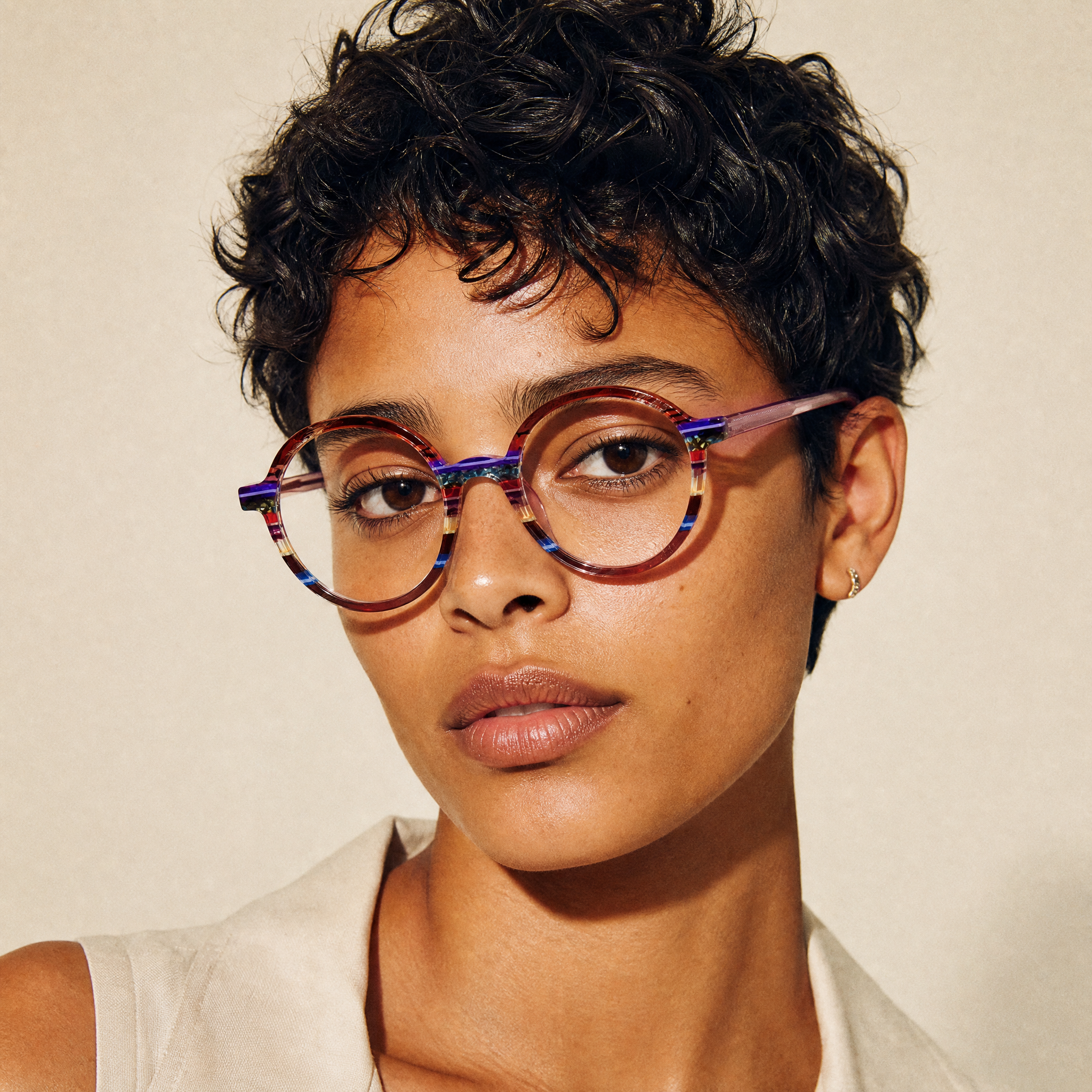
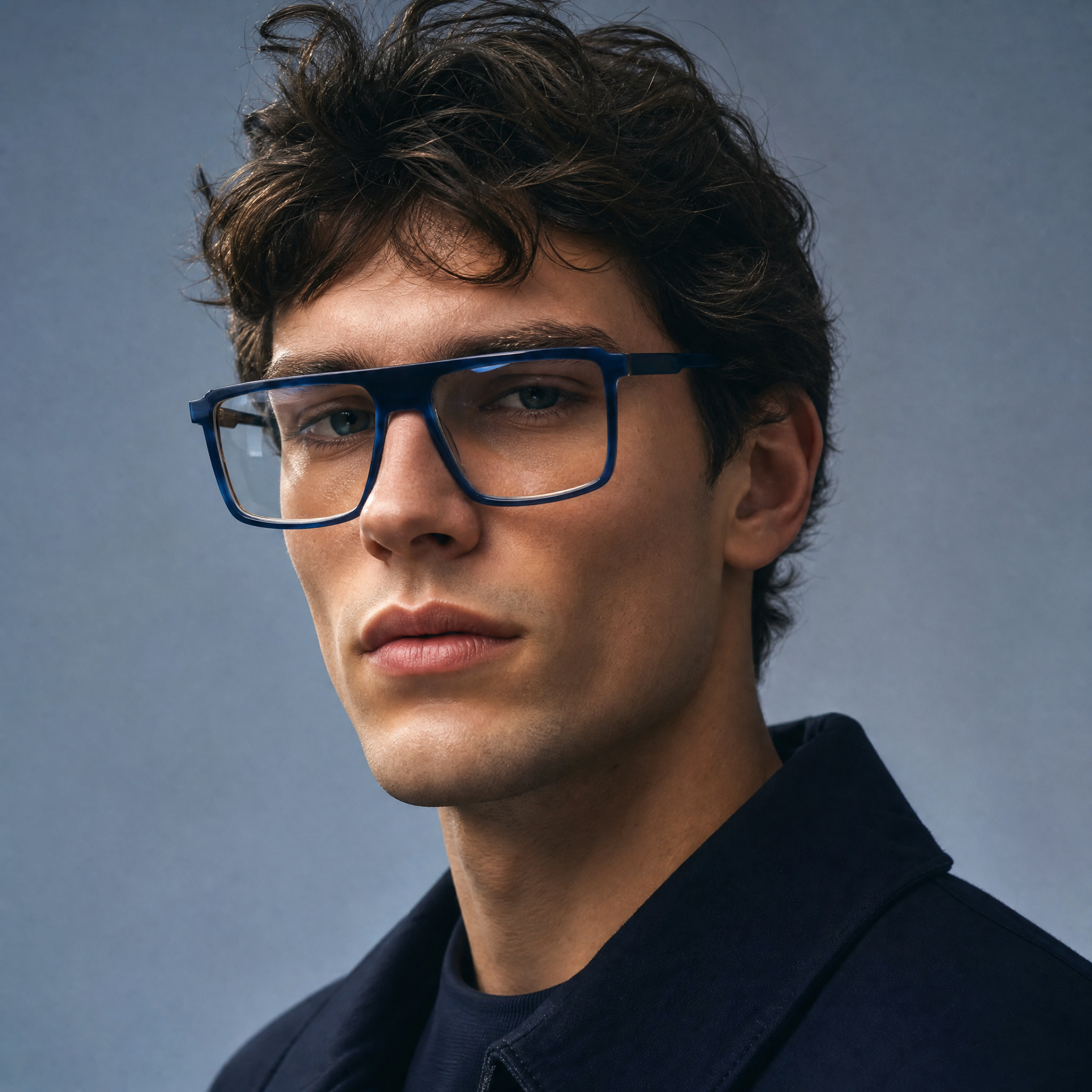


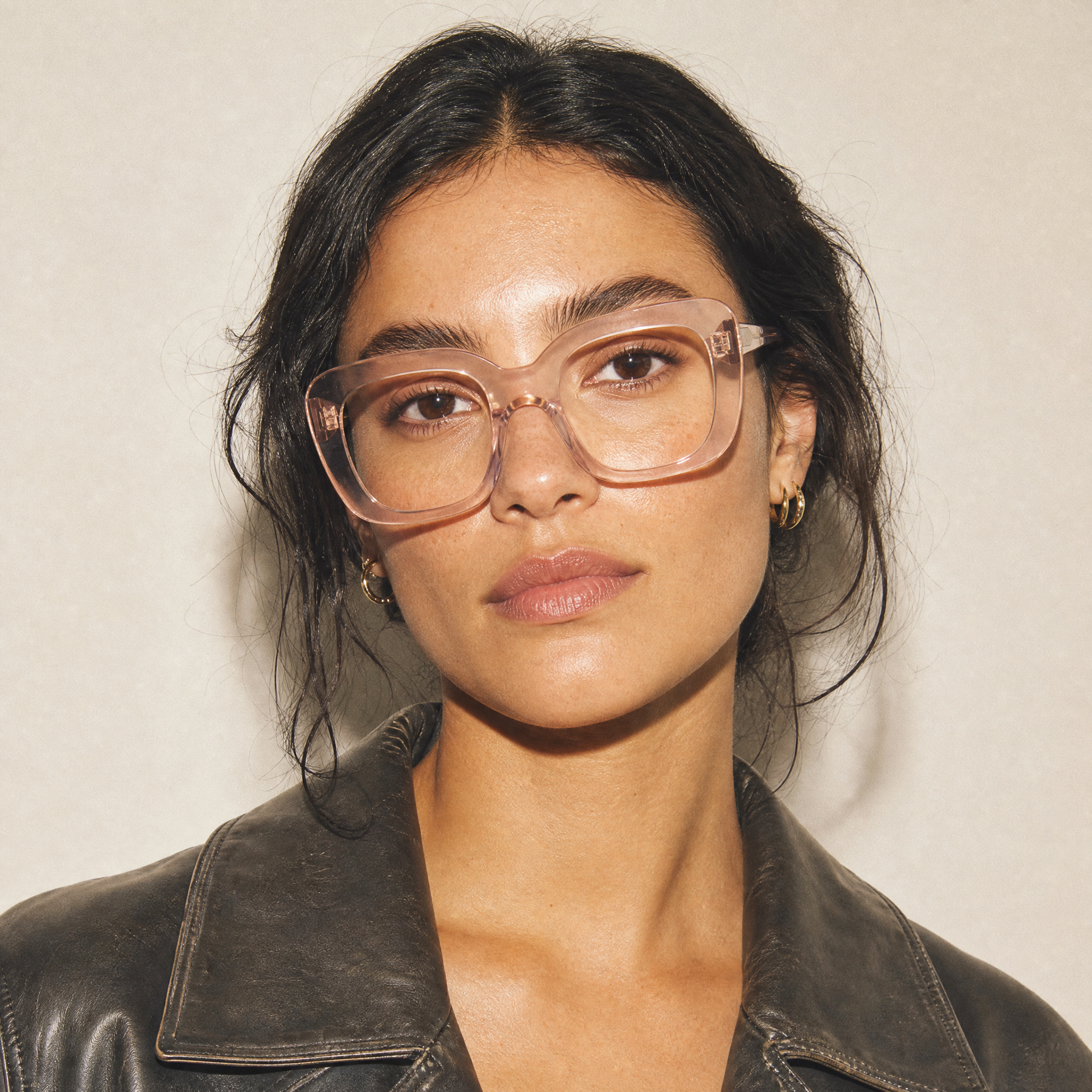


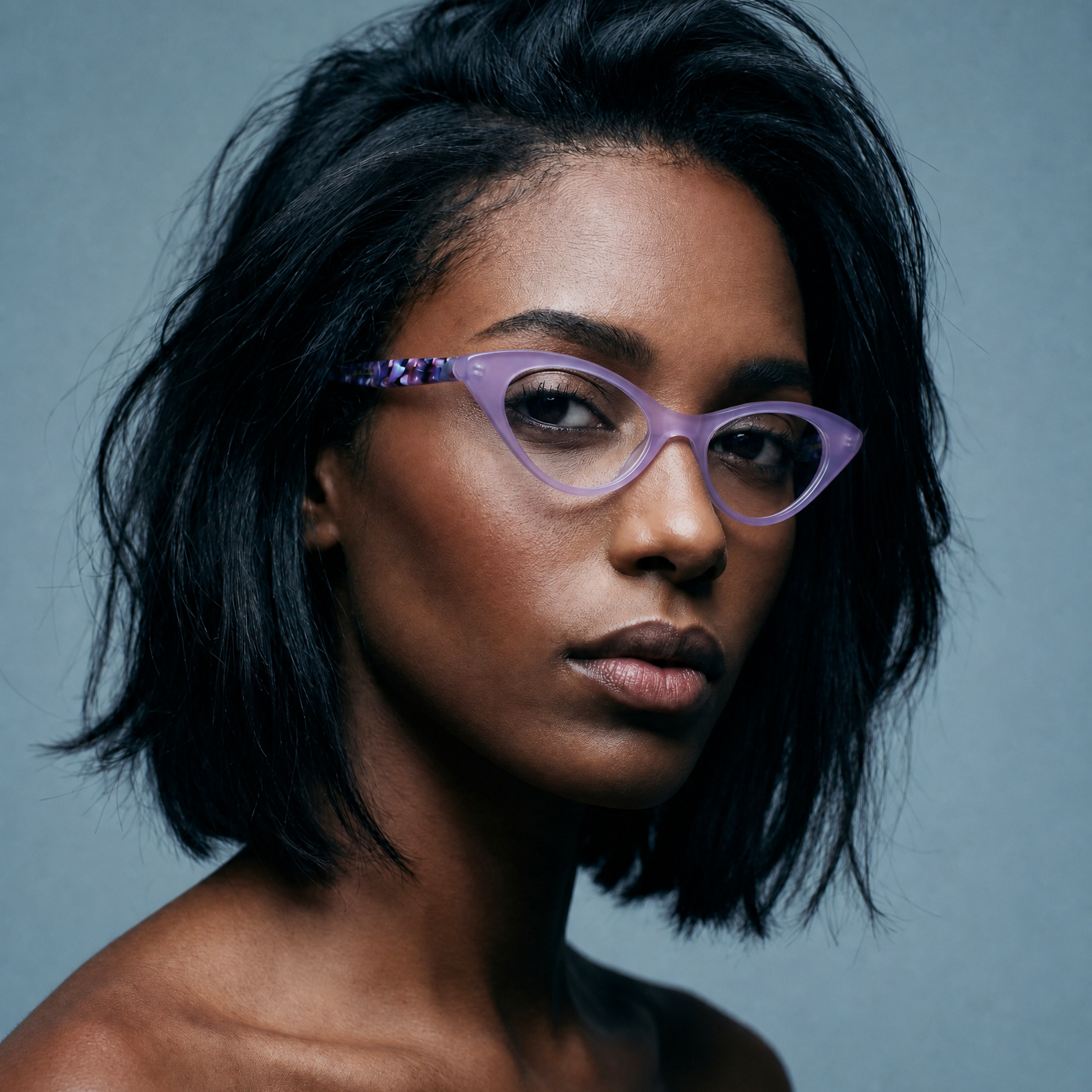

The Complete Guide to Eyeglasses: 250+ Terms, Frame Styles, Lens Types & Buying Advice
Everything you need to know about eyeglasses—from frame styles and lens technology to sizing, materials, prescriptions, and optical terminology—all in one expertly curated resource.
Discover how to choose eyeglasses that complement your unique face shape and features.
Learn how to identify whether your face is round, oval, square, heart-shaped, diamond, or another common face shape.
Explore the most flattering frame shapes, proportions, and styles for each face shape.
Understand how frame width, angles, curves, and proportions can create balance and contrast.
Find expert styling guidance for choosing glasses that suit both your features and personal style.
Browse recommended eyewear styles and frame inspiration for every face shape.
Take the Perfect Frames Quiz for personalized recommendations based on your features, fit preferences, and style.
Introduction
Shopping for eyeglasses should feel exciting—not overwhelming.
Yet between unfamiliar measurements, endless frame styles, prescription terminology, lens options, and dozens of material choices, finding the right pair can quickly become confusing.
What's the difference between acetate and plastic?
What do the numbers inside your glasses actually mean?
Are progressive lenses better than bifocals?
Which frame styles work best for your face shape?
Should you choose titanium or acetate?
Whether you're shopping for your first pair of prescription glasses, updating your personal style, or simply learning more about modern eyewear, you've come to the right place.
This guide was created by the eyewear experts at Vint & York to answer virtually every question you'll encounter while shopping for glasses. Inside you'll discover more than 250 eyewear terms, detailed explanations of lens technology, professional fitting advice, frame style inspiration, and practical buying tips to help you shop with confidence.
Rather than jumping between dozens of articles, bookmark this page as your complete reference whenever you're searching for answers about eyewear.
Why Trust Vint & York?
At Vint & York, we believe the perfect pair of glasses should do more than improve your vision—they should become an extension of your personality.
Every collection we design blends timeless inspiration with modern craftsmanship, creating eyewear that's equal parts functional, comfortable, and fashion-forward.
Our team works closely with premium materials, advanced prescription lenses, and contemporary frame designs every day, giving us firsthand insight into what truly matters when choosing exceptional eyewear.
Whether you're exploring your very first prescription or building a collection of statement frames, this guide is designed to help you make informed decisions with confidence.
Table of contents
Looking for your perfect frames?
Finding glasses doesn't have to be complicated.
Take our Frame Finder Quiz to receive personalized recommendations based on your face shape, style preferences, prescription needs, and lifestyle.
How to Determine Your Face Shape
- Finding your face shape is easier than you might think—and you don't need any special tools to do it.
Pull your hair back, stand in front of a well-lit mirror, and look closely at the overall proportions of your face. Instead of focusing on one feature, compare the width of your forehead, cheekbones, and jawline, along with the overall length of your face.
Ask yourself these questions:
- Is my face longer than it is wide?
- Which part of my face is the widest?
- Is my jawline soft and rounded or more angular?
- Does my forehead appear wider than my chin?
Very few people fit perfectly into a single category, so don't worry if you recognize features from more than one face shape. The goal isn't to fit into a perfect box—it's to understand which frame styles naturally create the most balance and harmony.
Quick Face Shape Guide
| If your face looks like... | Your face shape is likely... |
|---|---|
| Soft curves with similar width and length | Round |
| Slightly longer than wide with balanced proportions | Oval |
| Strong jawline with a broad forehead | Square |
| Wide forehead tapering to a narrower chin | Heart |
| Narrow forehead and jaw with prominent cheekbones | Diamond |
| Long and narrow with straight sides | Rectangle |
Why Face Shape Matters
The best eyewear doesn't change your appearance—it enhances it.
A well-chosen frame creates visual balance by complementing your natural proportions. For example, angular frames can add definition to softer facial features, while rounder silhouettes can soften stronger jawlines.
Of course, personal style matters just as much. If you love oversized acetate frames or bold geometric shapes, wear them with confidence. Face shape is simply a helpful starting point—not a rulebook.
Editorial Tip
The most flattering glasses combine three things:
✔ Your face shape
✔ Your prescription and lifestyle needs
✔ Your personal style
The perfect pair should feel like an extension of your personality—not just an accessory.
BEST GLASSES FOR ROUND FACES
Round faces typically have soft curves, full cheeks, and similar width and length measurements. The goal when choosing frames is often to add definition and create the appearance of more structure.
Characteristics of a Round Face
- Soft jawline
- Rounded chin
- Full cheeks
- Similar width and length
- Few sharp angles
Best Frame Styles
- Rectangular glasses
- Square frames
- Geometric silhouettes
- Browline glasses
- Cat-eye frames
These styles introduce clean lines that contrast beautifully with softer facial features.
Styles to Approach Carefully
Very small round frames may emphasize facial roundness rather than create balance. That doesn't mean you can't wear them—but if you're looking for the most traditionally flattering option, angular frames are often a better place to start.
Our Favorite Picks for Round Faces
I'd recommend featuring some of your strongest performers, such as:
- Belle
- Myrtle
- Any bold rectangular acetate frame
- One cat-eye style

BEST GLASSES FOR OVAL FACES
People with oval face shapes are often considered the most versatile when it comes to eyewear. Thanks to their naturally balanced proportions, an oval face can complement a wide variety of frame styles without overwhelming your features.
Rather than trying to create balance, the goal is to maintain the harmony your face already has while choosing frames that reflect your personal style.
Characteristics of an Oval Face
You may have an oval face if you have:
- A face that's slightly longer than it is wide
- Gently rounded jawline
- Balanced forehead and cheekbone width
- Soft, symmetrical features
- A chin that's slightly narrower than the forehead
Because your features are naturally proportional, you'll have more flexibility when experimenting with different frame shapes.
Best Glasses for Oval Faces
Almost any frame style can work beautifully on an oval face, making this one of the easiest face shapes to shop for.
Some of our favorite options include:
- Rectangular glasses
- Square frames
- Cat-eye glasses
- Round frames
- Geometric styles
- Browline glasses
- Oversized acetate frames
- Aviators
These silhouettes enhance your facial proportions without overpowering them, allowing your personality and style to take center stage.
Why These Frames Work
Oval faces already have excellent natural balance, so the best frames simply preserve that harmony.
Frames that are roughly the same width as your cheekbones create an effortless, proportional look. Because you aren't trying to soften or sharpen any particular feature, you have the freedom to experiment with bold colors, statement shapes, and oversized silhouettes that might feel overwhelming on other face shapes.
If you've always wanted to try an eye-catching cat-eye or a modern geometric frame, an oval face is one of the best canvases for those styles.
Styles to Approach Carefully
While oval faces are incredibly versatile, there are a few styles that can disrupt your natural proportions.
Very narrow frames may make your face appear longer, while extremely oversized frames can overwhelm your features if they're significantly wider than your face.
When shopping, look for frames that align closely with the widest part of your face for the most balanced appearance.
Style Inspiration
Oval faces pair beautifully with both timeless classics and fashion-forward statement pieces.
If your personal style leans minimalist, consider refined metal frames or clean rectangular silhouettes. If you prefer a bolder look, oversized acetate, geometric frames, or dramatic cat-eye glasses can add personality while maintaining balance.
The beauty of an oval face is that your frame choice can be guided more by your wardrobe and lifestyle than by strict styling rules.
Our Favorite Picks for Oval Faces
Suggested mix:
- A classic rectangular acetate frame
- A bold cat-eye
- A round metal frame
- A geometric statement frame
- An oversized bestseller
Pro Tip
Don't feel limited by traditional "rules."
Because oval faces suit such a wide range of eyewear, this is the perfect opportunity to choose frames that express your personality rather than simply following conventional advice. Whether your style is understated, vintage-inspired, or bold and artistic, let your glasses become an extension of who you are.

BEST GLASSES FOR SQUARE FACES
Square face shapes are known for their strong, defined features and naturally balanced proportions. A prominent jawline, broad forehead, and angular facial structure create a bold look that pairs beautifully with the right eyewear.
When choosing glasses for a square face, the goal is often to introduce softness and contrast. Rounded silhouettes can help balance sharper facial angles, creating a harmonious and effortless appearance.
Characteristics of a Square Face
You may have a square face if you have:
- A broad forehead
- Strong, well-defined jawline
- Wide cheekbones
- Similar width from forehead to jaw
- Angular facial features
Square faces are naturally striking and photograph exceptionally well, making them one of the most recognizable face shapes.
Best Glasses for Square Faces
Frames with gentle curves help soften angular features while maintaining your face's natural symmetry.
Some of our favorite styles include:
- Round glasses
- Oval frames
- Cat-eye glasses
- Aviator frames
- Thin metal frames
- Rimless or semi-rimless styles
These silhouettes create contrast against strong jawlines and broad foreheads, resulting in a balanced, flattering look.
Why These Frames Work
Strong facial features naturally draw attention to the jawline and forehead. Rounded or softly curved frames help offset these angles by introducing visual softness around the eyes.
Oval and round frames create contrast without competing with your features, while lightweight metal frames keep the overall look refined and effortless.
Cat-eye frames can also be especially flattering, as their lifted outer corners draw the eye upward and add a touch of elegance without emphasizing the width of the jaw.
Styles to Approach Carefully
Square or boxy frames aren't off-limits, but they can emphasize the angularity of your face if they're particularly thick or oversized.
Likewise, frames that are significantly wider than your face may make your features appear broader.
If you love structured frames, consider choosing styles with softer corners or thinner profiles to maintain balance.
Style Inspiration
Square faces pair beautifully with eyewear that blends structure and softness.
Minimalist metal frames offer an understated, sophisticated look, while oversized round acetate frames create a confident, fashion-forward statement. Cat-eye silhouettes add a touch of vintage glamour, and classic aviators bring effortless versatility to both casual and professional wardrobes.
Because square faces naturally have strong definition, even subtle frame designs can make a lasting impression.
Our Favorite Picks for Square Faces
Suggested mix:
- A classic round acetate frame
- A thin metal oval frame
- A refined cat-eye
- An aviator
- A semi-rimless style
Pro Tip
Don't be afraid of contrast.
One of the easiest ways to create balance is by choosing frames that differ from your natural facial structure. If your features are bold and angular, softer frame shapes often create a more relaxed, approachable appearance while still highlighting your strongest features.

BEST GLASSES FOR HEART-SHAPED FACES
Heart-shaped faces are beautifully balanced by a wider forehead, high cheekbones, and a narrower chin. This naturally elegant face shape pairs well with eyewear that creates harmony between the upper and lower portions of the face.
When selecting glasses for a heart-shaped face, the goal is to soften the forehead while adding subtle visual weight near the jawline. Frames with gentle curves and lighter designs often create the most flattering result.
Characteristics of a Heart-Shaped Face
You may have a heart-shaped face if you have:
- A wider forehead
- High or prominent cheekbones
- A narrow or pointed chin
- A face that gradually tapers from top to bottom
- Soft, feminine facial proportions
Many people with heart-shaped faces have naturally expressive eyes and well-defined cheekbones, making eyewear an excellent way to highlight these features.
Best Glasses for Heart-Shaped Faces
Frames that balance the width of the forehead while drawing attention toward the center and lower half of the face are especially flattering.
Some of our favorite styles include:
- Round glasses
- Oval frames
- Aviators
- Soft cat-eye glasses
- Rimless frames
- Thin metal frames
- Light acetate styles
These silhouettes create visual balance without overwhelming delicate facial features.
Why These Frames Work
Because heart-shaped faces are naturally wider at the forehead and narrower at the chin, softer frame shapes help distribute visual weight more evenly across the face.
Round and oval frames introduce gentle curves that complement high cheekbones, while lighter materials prevent the upper half of the face from feeling too heavy. Aviator frames are another excellent option, as their slightly wider lower portion naturally balances a narrower chin.
Rather than hiding your features, these frame styles enhance your face's graceful proportions while maintaining an effortless, sophisticated look.
Styles to Approach Carefully
Very top-heavy frames, thick browline styles, or oversized square frames may emphasize forehead width more than desired.
That's not to say you can't wear them—personal style always comes first—but if your goal is creating the most balanced appearance, softer silhouettes are often the better choice.
If you love bold acetate frames, consider styles with thinner edges or lighter colors to keep the look feeling open and balanced.
Style Inspiration
Heart-shaped faces often look stunning in timeless, elegant eyewear.
Delicate metal frames create an understated, refined aesthetic, while soft cat-eye styles offer a subtle vintage influence without overpowering your features. Transparent acetate frames, warm tortoiseshell patterns, and softly rounded silhouettes all complement the natural balance of this face shape.
Whether your style is classic, romantic, or modern, heart-shaped faces offer plenty of versatility for experimenting with different looks.
Our Favorite Picks for Heart-Shaped Faces
Suggested mix:
- A lightweight round metal frame
- A soft cat-eye
- A classic aviator
- A transparent acetate frame
- A refined oval silhouette
Pro Tip
Light colors can make a big difference.
Crystal, champagne, blush, and transparent acetate frames create a lighter visual effect that beautifully complements heart-shaped faces. These softer tones enhance your features without drawing excessive attention to the forehead, making them an excellent choice for everyday wear.

BEST GLASSES FOR DIAMOND-SHAPED FACES
Diamond-shaped faces are among the rarest face shapes, characterized by striking cheekbones, a narrower forehead, and a tapered jawline. This naturally sculpted facial structure is elegant, distinctive, and well-suited to a wide variety of eyewear styles.
The best glasses for diamond-shaped faces help soften prominent cheekbones while drawing attention to the eyes and creating balance between the forehead and jawline.
Characteristics of a Diamond-Shaped Face
You may have a diamond-shaped face if you have:
- Prominent, high cheekbones
- A narrow forehead
- A narrow jawline
- A pointed or delicate chin
- The widest part of your face is your cheekbones
Because your facial features already have beautiful definition, the right pair of glasses should complement—not compete with—your natural bone structure.
Best Glasses for Diamond-Shaped Faces
Frames that add width to the upper portion of the face and introduce soft curves are especially flattering.
Some of our favorite styles include:
- Cat-eye glasses
- Oval frames
- Browline glasses
- Rimless styles
- Geometric frames with softened edges
- Round glasses
These silhouettes help balance facial proportions while highlighting your eyes and cheekbones.
Why These Frames Work
Diamond-shaped faces naturally draw attention to the cheekbones, creating a beautifully sculpted appearance. Frames that emphasize the browline or gently widen the forehead help create visual harmony without overshadowing your strongest features.
Cat-eye styles naturally lift the eye and complement high cheekbones, while oval and round frames soften sharper angles for an elegant, balanced look.
Because your face already has strong definition, you don't need oversized or overly bold frames to make a statement—often, subtle details have the greatest impact.
Styles to Approach Carefully
Very narrow frames or extremely angular styles can exaggerate the width of the cheekbones, making the face appear more angular.
Likewise, oversized frames that extend far beyond the cheekbones may overwhelm your naturally refined proportions.
If you love bold eyewear, consider styles with softer edges or gently upswept silhouettes instead of heavy square frames.
Style Inspiration
Diamond-shaped faces have a naturally sophisticated look that pairs beautifully with both vintage-inspired and contemporary eyewear.
Elegant cat-eye frames bring attention to the eyes while enhancing your cheekbones, while lightweight metal frames offer an effortlessly refined aesthetic. Geometric silhouettes add personality without distracting from your facial structure, and transparent acetate frames create a modern, understated look.
Whether you gravitate toward timeless classics or statement-making designs, diamond-shaped faces provide the perfect foundation for expressive eyewear.
Our Favorite Picks for Diamond-Shaped Faces
Suggested mix:
- A signature cat-eye bestseller
- A soft oval metal frame
- A lightweight browline style
- A geometric acetate frame
- A transparent crystal frame
Pro Tip
Let your cheekbones do the talking.
One of the biggest advantages of a diamond-shaped face is its naturally defined bone structure. Rather than choosing oversized frames that compete for attention, look for styles that enhance your eyes and complement your cheekbones. Sometimes the most flattering glasses are the ones that feel effortlessly balanced rather than dramatically bold.

BEST GLASSES FOR RECTANGLE & OBLONG FACES
Rectangle and oblong face shapes are longer than they are wide, often featuring straight cheek lines and a balanced forehead and jawline. While these two face shapes are slightly different, they share many of the same styling principles, making them easy to cover together.
When choosing glasses for a longer face, the goal is to create the illusion of width while breaking up vertical length. Frames with greater lens depth, bold detailing, and balanced proportions can help your face appear shorter and more symmetrical.
Characteristics of a Rectangle or Oblong Face
You may have a rectangle or oblong face if you have:
- A face that is noticeably longer than it is wide
- Straight cheek lines
- A forehead, cheekbones, and jawline with similar widths
- A longer nose or elongated facial proportions
- A softly rounded or squared chin
While oblong faces tend to have softer contours and rectangle faces often have a more defined jawline, the same frame recommendations generally apply to both.
Best Glasses for Rectangle & Oblong Faces
Frames that add visual width and depth help create balance while minimizing the appearance of facial length.
Some of our favorite styles include:
- Oversized acetate frames
- Round glasses
- Square frames with deeper lenses
- Browline glasses
- Cat-eye glasses
- Bold geometric styles
- Thick-rimmed frames
Larger lenses and stronger frame lines naturally break up the vertical proportions of the face, creating a more balanced appearance.
Why These Frames Work
Longer face shapes benefit from glasses that occupy more visual space. Deeper lenses shorten the appearance of facial length, while wider frames help emphasize horizontal balance.
Oversized acetate frames are especially flattering because they create presence without feeling overwhelming. Browline styles draw attention upward toward the eyes, while cat-eye frames add lift and soften elongated proportions.
Choosing frames with a little more depth than width often creates the most naturally balanced result.
Styles to Approach Carefully
Very narrow rectangular frames and small wire glasses can make longer faces appear even longer by emphasizing vertical lines.
Likewise, tiny minimalist frames may leave too much open space on the face, reducing overall balance.
If you love lightweight metal frames, consider choosing styles with taller lenses or slightly oversized proportions rather than very narrow silhouettes.
Style Inspiration
Rectangle and oblong face shapes are ideal for making a statement with eyewear.
Bold acetate frames, rich tortoiseshell finishes, transparent crystal styles, and fashion-forward geometric silhouettes all complement longer facial proportions beautifully. If you prefer a more understated look, rounded metal frames or refined browline styles offer timeless sophistication without sacrificing balance.
Because longer faces provide additional vertical space, they're particularly well suited to oversized frames that might overwhelm shorter face shapes.
Our Favorite Picks for Rectangle & Oblong Faces
Suggested mix:
- An oversized acetate bestseller
- A bold square frame
- A rounded metal frame
- A browline style
- A geometric statement frame
Pro Tip
Don't be afraid to go a little bigger.
Many people with longer face shapes instinctively choose smaller frames, but the opposite is often true. A slightly larger frame with deeper lenses can create better visual balance while making your glasses feel more intentional and fashion-forward.

Still Not Sure Which Face Shape You Have?
If your features seem to fit more than one category, you're not alone.
Very few people have a perfectly round, square, or heart-shaped face. Most fall somewhere between two face shapes, which is why general recommendations should always be treated as guidelines rather than strict rules.
Your hairstyle, prescription strength, bridge fit, and personal style all play an important role in finding glasses you'll truly love wearing.
If you're still unsure where to start, our Frame Finder Quiz can help narrow your options with personalized recommendations based on your unique features, style preferences, and lifestyle.
The Complete Guide to Eyeglass Frame Styles
Choosing the right eyeglass frame is about much more than following trends. The shape of your frames influences how your features are perceived, how your personality comes across, and ultimately how confident you feel every time you put them on.
Some styles have remained fashion staples for generations, while others offer a more contemporary or artistic aesthetic. Whether you're searching for timeless sophistication, vintage inspiration, or a bold statement piece, understanding the unique characteristics of each frame style makes shopping significantly easier.
Below, we'll explore some of the most iconic eyeglass silhouettes, who they flatter best, and how to incorporate them into your personal style.
Cat-Eye Glasses
Elegant, confident, and unmistakably timeless, cat-eye glasses have remained one of the most beloved eyewear styles for more than seventy years. Characterized by their upswept outer corners, they instantly add lift to the face while creating an effortlessly polished appearance.
Originally popularized during the 1950s, today's cat-eye frames range from subtle everyday silhouettes to bold fashion statements, making them surprisingly versatile for nearly every wardrobe.
Best For
- Round faces
- Oval faces
- Diamond faces
- Heart-shaped faces
Why They Work
The upward sweep naturally draws attention toward the eyes and cheekbones while creating the illusion of lifted facial features.
Style Personality
Elegant • Feminine • Fashion-forward • Vintage-inspired
Best Materials
- Acetate
- Crystal acetate
- Tortoiseshell
- Mixed metal
Styling Tips
Classic black cat-eye frames never go out of style, while crystal acetate offers a softer, more contemporary interpretation. Oversized versions create dramatic fashion statements, while smaller silhouettes feel timeless and refined.
Vint & York Favorites
Round Glasses
Round glasses have become synonymous with effortless sophistication. Their perfectly curved silhouette softens facial features while offering one of the most recognizable looks in eyewear history.
From intellectual icons and artists to modern creatives, round frames continue to transcend trends thanks to their versatility and understated charm.
Best For
- Square faces
- Rectangle faces
- Oblong faces
- Diamond faces
Why They Work
Curved lenses balance strong jawlines and angular facial features, creating a softer overall appearance.
Style Personality
Creative • Classic • Intellectual • Minimalist
Best Materials
- Thin metal
- Titanium
- Lightweight acetate
- Wire frames
Styling Tips
Larger round frames create a contemporary editorial feel, while smaller metal rounds lean vintage. If you're trying round glasses for the first time, medium-sized frames tend to feel the most universally flattering.
Vint & York Favorites
Square Glasses
Square frames combine strong architectural lines with contemporary sophistication. Their structured silhouette creates bold definition, making them an excellent choice for anyone seeking confident, modern eyewear.
Available in everything from refined metal to chunky acetate, square glasses have become a staple in both fashion and professional settings.
Best For
- Oval faces
- Round faces
- Heart-shaped faces
Why They Work
Straight edges provide contrast against softer facial features while emphasizing symmetry and structure.
Style Personality
Confident • Modern • Refined • Contemporary
Best Materials
- Thick acetate
- Transparent acetate
- Titanium
- Mixed metal
Styling Tips
Oversized square frames have become increasingly popular for creating an editorial, fashion-forward look. For everyday wear, medium-width square frames offer exceptional versatility without overpowering your features.
Vint & York Favorites
Rectangle Glasses
Rectangle glasses remain one of the most versatile frame styles available. Their clean lines create definition without feeling overly bold, making them a favorite for both professional and everyday wear.
Because of their balanced proportions, rectangular frames work well across a wide variety of face shapes and personal styles.
Best For
- Round faces
- Oval faces
- Heart-shaped faces
Why They Work
Angular lines add structure and visual definition while helping elongate softer facial features.
Style Personality
Professional • Modern • Timeless • Versatile
Best Materials
- Premium acetate
- Metal
- Mixed materials
Styling Tips
If you're looking for one frame style that works almost anywhere—from business meetings to casual weekends—rectangle frames are one of the safest and most flattering choices.
Choose slightly thicker acetate for a bolder fashion statement or slim metal frames for a more understated appearance.
Vint & York Favorites
Aviator Glasses
Few eyewear styles have achieved the cultural status of aviators. Originally designed for military pilots in the 1930s, aviator glasses have evolved into one of the most iconic silhouettes in eyewear history.
Defined by their teardrop-shaped lenses and double bridge, aviators strike the perfect balance between classic heritage and contemporary style.
Best For
- Oval faces
- Square faces
- Heart-shaped faces
Why They Work
Their softly curved lower lenses balance angular facial features while the double bridge adds subtle visual structure.
Style Personality
Classic • Adventurous • Timeless • Confident
Best Materials
- Stainless steel
- Titanium
- Lightweight metal
- Mixed acetate
Styling Tips
Prescription aviators offer the same timeless aesthetic as their sunglass counterparts while remaining surprisingly versatile for everyday wear. They pair equally well with business attire, casual denim, or elevated weekend looks.
Modern interpretations often feature slimmer profiles and softer proportions, making them easier to wear than traditional oversized pilot frames.
Vint & York Favorites
Browline Glasses
Browline glasses have been a symbol of confidence and sophistication since they first gained popularity in the 1950s. Defined by a bold upper frame that mimics the natural browline and a thinner lower rim, this iconic silhouette blends vintage charm with modern versatility.
Their distinctive design naturally draws attention to the eyes, making browline glasses an excellent choice for anyone seeking a polished yet approachable look.
Best For
- Round faces
- Oval faces
- Heart-shaped faces
- Diamond faces
Why They Work
The pronounced upper frame adds structure to the face while emphasizing the eyes and eyebrows. This creates visual balance without overwhelming your features.
Style Personality
Classic • Intelligent • Professional • Vintage-Inspired
Best Materials
- Acetate and metal combinations
- Lightweight titanium
- Stainless steel
- Premium acetate
Styling Tips
Browline glasses pair effortlessly with both business and casual wardrobes. Their timeless aesthetic works particularly well for those who appreciate heritage-inspired fashion with a contemporary edge.
Vint & York Favorites
Geometric Glasses
Geometric glasses break away from traditional silhouettes with bold angles, unexpected proportions, and modern architectural design. Hexagons, octagons, and softly sculpted polygons have become increasingly popular among fashion enthusiasts looking for something distinctive.
These frames are perfect for expressing individuality while maintaining an elevated, editorial aesthetic.
Best For
- Oval faces
- Round faces
- Heart-shaped faces
Why They Work
Angular lines create visual interest while adding structure to softer facial features. Their unconventional shapes naturally become the focal point of your look.
Style Personality
Creative • Fashion-Forward • Artistic • Modern
Best Materials
- Acetate
- Titanium
- Lightweight metal
- Mixed materials
Styling Tips
Because geometric frames already make a statement, they pair beautifully with simple, understated wardrobes. Let your glasses become the centerpiece of your overall style.
Vint & York Favorites
Oval Glasses
Oval glasses offer a softer alternative to round and rectangular frames. Their gently curved silhouette provides a timeless, understated look that flatters a wide variety of facial features.
Often chosen for their versatility and comfort, oval frames strike the perfect balance between classic elegance and everyday wearability.
Best For
- Square faces
- Diamond faces
- Rectangle faces
- Oblong faces
Why They Work
The gentle curves soften strong jawlines while creating balance without adding unnecessary width or sharpness.
Style Personality
Elegant • Minimalist • Refined • Timeless
Best Materials
- Thin metal
- Titanium
- Lightweight acetate
Styling Tips
Oval glasses are ideal for anyone seeking a frame that feels subtle yet sophisticated. Neutral colors such as tortoiseshell, black, champagne, and crystal acetate allow the elegant shape to shine.
Vint & York Favorites
Wayfarer Glasses
Few eyewear styles have achieved the legendary status of the Wayfarer. Introduced in the mid-20th century, this iconic frame quickly became associated with artists, musicians, filmmakers, and cultural icons.
Its slightly trapezoidal shape remains one of the most versatile and universally flattering silhouettes ever created.
Best For
- Oval faces
- Round faces
- Heart-shaped faces
- Diamond faces
Why They Work
Wayfarers combine soft curves with structured lines, creating a balanced frame that suits both casual and professional environments.
Style Personality
Effortless • Classic • Confident • Timeless
Best Materials
- Premium acetate
- Crystal acetate
- Lightweight mixed materials
Styling Tips
Wayfarers transition effortlessly from work to weekends and pair equally well with denim, tailoring, or elevated casual wear. Their versatility makes them an excellent first pair of designer eyeglasses.
Vint & York Favorites
Butterfly Glasses
Butterfly glasses are known for their oversized lenses and graceful upswept curves, creating an elegant silhouette inspired by the wings of a butterfly.
These statement-making frames celebrate glamour while maintaining a refined, wearable aesthetic that has remained popular for decades.
Best For
- Oval faces
- Heart-shaped faces
- Diamond faces
- Rectangle faces
Why They Work
Their generous proportions add softness while naturally lifting the face and drawing attention toward the eyes.
Style Personality
Elegant • Glamorous • Sophisticated • Bold
Best Materials
- Premium acetate
- Mixed materials
- Lightweight acetate
Styling Tips
Butterfly frames pair beautifully with both tailored wardrobes and feminine silhouettes. Choose classic tortoiseshell for timeless elegance or crystal acetate for a fresh, contemporary look.
Vint & York Favorites
Oversized Glasses
Oversized glasses have evolved from fashion statements into modern classics. Characterized by larger lenses and generous proportions, these frames combine practicality with unmistakable style.
When properly fitted, oversized frames create a confident, editorial-inspired look while offering excellent lens coverage and visual comfort.
Best For
- Oval faces
- Rectangle faces
- Oblong faces
- Square faces
Why They Work
Larger frames create presence without sacrificing balance, making them especially flattering on longer or more angular face shapes.
Style Personality
Editorial • Fashion-Forward • Confident • Contemporary
Best Materials
- Acetate
- Crystal acetate
- Mixed materials
- Lightweight titanium
Styling Tips
Oversized doesn't mean overwhelming. The ideal oversized frame should extend only slightly beyond the widest part of your face while remaining comfortable throughout the day.
For a timeless investment piece, choose classic colors such as black, tortoiseshell, or crystal. If you're feeling adventurous, oversized geometric frames or translucent acetate offer a modern interpretation of this enduring trend.
Vint & York Favorites
Finding Your Signature Frame Style
The best frame style isn't necessarily the trendiest one—it's the one that feels most like you.
Whether you're drawn to vintage-inspired cat-eyes, clean architectural rectangles, bold oversized acetate, or refined metal frames, your glasses should reflect both your personality and your lifestyle.
While face shape can provide helpful guidance, confidence, comfort, and self-expression are what truly make a pair of glasses unforgettable.
If you're still exploring your options, try experimenting with silhouettes outside your comfort zone. You may discover that the frame you never expected becomes the one you reach for every morning.
Need help narrowing down your options?
Take our Frame Finder Quiz for personalized recommendations based on your face shape, style preferences, and lifestyle.
Editor's Tip
Fashion trends come and go, but confidence never goes out of style.
The best glasses aren't simply the ones that flatter your face—they're the ones that make you feel like yourself. Whether you gravitate toward bold acetate frames, minimalist metal silhouettes, or vintage-inspired classics, choose eyewear you'll genuinely enjoy wearing every day.
Choosing the Right Eyeglass Frame Material
The material your glasses are made from affects much more than appearance. It influences comfort, durability, flexibility, weight, adjustability, and how your frames feel after hours of everyday wear.
Modern eyewear is available in a wide range of premium materials, each offering unique benefits depending on your lifestyle, prescription, and personal style.
Whether you prefer the bold character of handcrafted acetate or the lightweight feel of titanium, understanding the differences will help you choose frames you'll love wearing every day.
Acetate Frames
Acetate has become the gold standard in premium eyewear. Unlike inexpensive molded plastic, cellulose acetate is derived from renewable cotton and wood pulp fibers before being handcrafted into durable sheets of material.
Its layered construction creates exceptional depth of color, rich tortoiseshell patterns, crystal-clear transparencies, and vibrant finishes that cannot be achieved with standard plastic frames.
Best For
- Everyday wear
- Fashion-forward styles
- Bold colors
- Statement frames
- Prescription eyewear
Why People Love Acetate
- Lightweight
- Durable
- Hypoallergenic
- Rich color depth
- Easy to adjust
- Luxurious finish
Because acetate is polished rather than painted, the color runs throughout the material instead of sitting only on the surface. This creates exceptional longevity and a premium appearance that improves with time.

Titanium Frames
Titanium has become one of the most sought-after materials in luxury eyewear thanks to its remarkable combination of strength and comfort.
Despite being incredibly lightweight, titanium is exceptionally durable and naturally resistant to corrosion, making it an excellent investment for everyday wear.
Best For
- Lightweight comfort
- Professional settings
- Sensitive skin
- Long-term durability
- Minimalist style
Why People Love Titanium
- Extremely lightweight
- Highly durable
- Rust resistant
- Hypoallergenic
- Flexible
- Comfortable for all-day wear
Titanium frames are particularly popular among people who wear glasses throughout the day and value comfort above all else.
Stainless Steel Frames
Stainless steel offers an excellent balance between durability, flexibility, and affordability. Its sleek appearance makes it one of the most versatile materials for modern eyewear.
Often found in minimalist designs, stainless steel provides a clean aesthetic while remaining strong enough for everyday use.
Best For
- Everyday wear
- Lightweight frames
- Modern styling
- Professional wardrobes
Benefits
- Durable
- Corrosion resistant
- Lightweight
- Affordable
- Easy to maintain
Mixed Material Frames
Many contemporary eyeglasses combine multiple materials to maximize both comfort and style.
A frame may feature an acetate front paired with lightweight metal temples, offering the bold appearance of acetate while reducing overall weight.
Benefits
- Better balance
- Increased comfort
- Unique aesthetics
- Modern construction
- Greater design flexibility
Mixed material frames have become increasingly popular among designer eyewear collections because they combine the best qualities of multiple materials.
Transparent Acetate
Crystal-clear and translucent acetate has become one of the defining eyewear trends of the past decade.
Rather than drawing attention through bold color, transparent frames create a lighter, more understated appearance while allowing your natural features to remain the focal point.
Best For
- Everyday wear
- Minimalist wardrobes
- Warm weather styling
- First-time glasses wearers
Transparent acetate complements virtually every hair color and skin tone while pairing effortlessly with both casual and professional outfits.
Metal Frames
Metal frames have remained timeless for generations thanks to their refined appearance and lightweight construction.
Available in finishes such as gold, silver, gunmetal, rose gold, and matte black, metal frames offer a sophisticated alternative to thicker acetate styles.
Best For
- Professional environments
- Minimalist aesthetics
- Lightweight comfort
- Smaller frame profiles
Metal frames are especially popular among those who prefer subtle, understated eyewear that complements rather than dominates their overall look.
Which Frame Material Is Best?
There isn't a single "best" frame material—only the material that's best for your lifestyle.
| Material | Lightweight | Durable | Fashion | Everyday Wear |
|---|---|---|---|---|
| Acetate | ⭐⭐⭐⭐☆ | ⭐⭐⭐⭐⭐ | ⭐⭐⭐⭐⭐ | ⭐⭐⭐⭐⭐ |
| Titanium | ⭐⭐⭐⭐⭐ | ⭐⭐⭐⭐⭐ | ⭐⭐⭐⭐☆ | ⭐⭐⭐⭐⭐ |
| Stainless Steel | ⭐⭐⭐⭐☆ | ⭐⭐⭐⭐☆ | ⭐⭐⭐⭐☆ | ⭐⭐⭐⭐☆ |
| Mixed Materials | ⭐⭐⭐⭐☆ | ⭐⭐⭐⭐⭐ | ⭐⭐⭐⭐⭐ | ⭐⭐⭐⭐⭐ |
Each offers distinct advantages, and many people eventually build a collection of frames made from different materials to suit different occasions.
Expert Tip
Think about your glasses the same way you think about shoes.
Some days call for lightweight, barely-there comfort. Other days call for bold statement pieces that become part of your outfit.
Many eyewear enthusiasts eventually own multiple pairs—perhaps a lightweight titanium frame for work, a bold acetate frame for evenings and weekends, and prescription sunglasses for travel and outdoor activities.
Choosing different materials allows you to enjoy the unique advantages of each while building a versatile eyewear wardrobe.
Frequently Asked Questions About Frame Materials
Are acetate frames better than plastic?
Premium acetate is generally considered superior to standard injection-molded plastic because it offers greater durability, richer colors, improved comfort, and a more luxurious finish.
Are titanium glasses worth it?
If comfort is your top priority, titanium is one of the best investments you can make. Its exceptional strength-to-weight ratio makes it one of the most comfortable frame materials available.
Which frame material lasts the longest?
Both premium acetate and titanium are known for their durability and can last for many years with proper care.
What's the lightest material for eyeglasses?
Titanium is widely regarded as one of the lightest and strongest materials used in premium eyewear.
Next Up: Understanding Eyeglass Lenses
Choosing beautiful frames is only half the equation. Your lenses determine how clearly you see, how comfortable your glasses feel throughout the day, and how well they perform in different environments.
In the next section, we'll explore everything you need to know about prescription lenses—from single vision and progressive lenses to blue light filtering, photochromic technology, high-index materials, and the lens coatings that can dramatically improve your everyday visual experience.
Understanding Eyeglass Lenses
Your frames may define your style, but your lenses define your experience.
The right lenses can improve visual clarity, reduce eye strain, enhance comfort during long workdays, and adapt to changing light conditions. Whether you're ordering your first prescription glasses or updating an existing pair, understanding your lens options will help you make a more informed decision.
Today's lens technology offers solutions for nearly every lifestyle—from reading and computer work to driving, outdoor activities, and multifocal vision correction.
Let's explore the most common lens types and how to determine which option is right for you.
Single Vision Lenses
Single vision lenses are the most commonly prescribed type of eyeglass lens. They provide one consistent prescription throughout the entire lens, correcting vision at a single distance.
Single vision lenses can be prescribed for:
- Nearsightedness (myopia)
- Farsightedness (hyperopia)
- Reading
- Computer work (when prescribed specifically)
Because of their simplicity, they offer crisp vision and adapt quickly for most wearers.
Best For
- First-time glasses wearers
- Everyday prescription glasses
- Reading glasses
- Distance vision
- Computer-specific prescriptions
Progressive Lenses
Progressive lenses provide multiple prescriptions within a single lens without the visible lines found in traditional bifocals.
They allow you to see clearly at:
- Distance
- Intermediate (computer)
- Near (reading)
As your eyes naturally move through different viewing zones, the prescription changes gradually, creating a seamless visual experience.
Best For
- Adults over 40
- Presbyopia
- Everyday wear
- Professionals
- Anyone who frequently switches between reading and distance vision
Many people appreciate progressive lenses because they eliminate the need to switch between multiple pairs of glasses throughout the day.
Reading Glasses
Reading glasses are specifically designed for close-up tasks such as reading books, working on crafts, or viewing smartphones and tablets.
Unlike progressive lenses, they are optimized solely for near vision.
Best For
- Reading books
- Sewing and crafting
- Smartphones
- Tablets
- Detailed work
If you only need occasional magnification for close-up tasks, dedicated reading glasses may be all you need.
Blue Light Lenses
Blue light lenses are designed to filter portions of high-energy visible (HEV) light emitted by digital screens such as computers, tablets, and smartphones.
While research into the long-term effects of blue light is still evolving, many wearers choose blue light filtering lenses for added comfort during extended screen use.
Benefits
- Reduced screen glare
- Improved visual comfort
- Less distracting reflections
- Popular among office workers and students
Blue light filtering can be added to many prescription and non-prescription lenses.
Photochromic Lenses
Photochromic lenses automatically darken when exposed to sunlight and return to a clear state indoors.
Often referred to as "transition lenses," they provide the convenience of two pairs of glasses in one.
Best For
- Everyday wear
- Frequent outdoor use
- Travel
- Light-sensitive eyes
Benefits include:
- Automatic UV protection
- Convenience
- Reduced need for prescription sunglasses
- Comfortable transition between environments
Polarized Lenses
Polarized lenses reduce intense glare caused by sunlight reflecting off water, roads, snow, and other flat surfaces.
Unlike ordinary tinted lenses, polarization specifically filters horizontal light waves that create distracting glare.
Best For
- Driving
- Fishing
- Boating
- Hiking
- Beach days
- Outdoor sports
Benefits include:
- Improved contrast
- Reduced glare
- Less eye fatigue
- Better visual comfort outdoors
High-Index Lenses
High-index lenses are manufactured using advanced materials that bend light more efficiently than traditional plastic lenses.
This allows them to remain significantly thinner and lighter, particularly for stronger prescriptions.
Best For
- Moderate to strong prescriptions
- Lightweight comfort
- Large frames
- Fashion-forward eyewear
High-index lenses often improve both comfort and appearance by reducing edge thickness.
Polycarbonate Lenses
Polycarbonate lenses are exceptionally impact-resistant and naturally block UV light.
Originally developed for aerospace applications, they have become one of the most popular materials for everyday prescription eyewear.
Best For
- Children
- Active lifestyles
- Sports
- Safety eyewear
- Everyday durability
Benefits include:
- Lightweight
- Highly impact resistant
- Built-in UV protection
Trivex Lenses
Trivex lenses combine many of the benefits of polycarbonate with enhanced optical clarity.
They are lightweight, durable, and offer excellent visual performance.
Best For
- Active lifestyles
- Premium prescription glasses
- Outdoor activities
- High-performance eyewear
Many opticians recommend Trivex for wearers seeking both durability and exceptional visual quality.
Which Lens Type Is Right for You?
Choosing the right lenses depends on how you spend your day.
| Lifestyle | Recommended Lens |
|---|---|
| Everyday Wear | Single Vision |
| Reading | Reading Lenses |
| Office Work | Blue Light + Anti-Reflective |
| Driving | Polarized Sunglasses |
| Multifocal Vision | Progressive Lenses |
| Strong Prescription | High-Index |
| Active Lifestyle | Polycarbonate or Trivex |
No single lens is perfect for everyone. Your prescription, daily routine, and personal preferences all play an important role in determining the best option.
Expert Tip
Think beyond your prescription.
The same prescription can feel dramatically different depending on the lens material, coatings, and technology you choose. Investing in high-quality lenses often improves comfort just as much as selecting the right frame.
Frequently Asked Questions
What's the difference between single vision and progressive lenses?
Single vision lenses correct one viewing distance, while progressive lenses provide multiple prescriptions for distance, intermediate, and near vision without visible lines.
Are blue light glasses worth it?
Many people who spend long hours using digital devices appreciate the additional visual comfort blue light filtering lenses can provide. Individual experiences vary, but they remain a popular option for office workers, students, and remote professionals.
Do photochromic lenses work in the car?
Most standard photochromic lenses do not darken fully inside a vehicle because many windshields block much of the UV light needed to activate them. Specialized driving photochromic lenses are available for certain situations.
Are high-index lenses thinner?
Yes. High-index materials bend light more efficiently, allowing lenses to be made thinner and lighter than standard plastic lenses for the same prescription.
Are polarized lenses the same as photochromic lenses?
No. Polarized lenses reduce glare, while photochromic lenses automatically adjust their tint in response to sunlight. Some lenses combine both technologies.
Continue Building Your Perfect Pair
Now that you understand the different lens options available, the next step is learning how lens coatings can further improve your everyday experience.
From anti-reflective coatings and scratch resistance to UV protection and hydrophobic treatments, these enhancements can make your glasses more durable, easier to clean, and more comfortable to wear every day.
Lens Coatings: Small Upgrades That Make a Big Difference
While your prescription determines how clearly you see, lens coatings determine how your glasses perform throughout the day.
The right coatings can reduce glare, repel water, protect against scratches, improve durability, and even make your lenses appear nearly invisible when you're talking with others or taking photos.
Many premium lenses include several coatings working together, creating a more comfortable and enjoyable everyday experience.
Anti-Reflective (AR) Coating
Anti-reflective coating, often called AR coating, is one of the most popular upgrades available for prescription lenses.
It reduces reflections from digital screens, headlights, overhead lighting, and bright indoor environments, allowing more light to pass through your lenses instead of bouncing off their surface.
Benefits
- Reduces distracting glare
- Improves night driving
- Makes your eyes more visible in photos and video calls
- Creates sharper, clearer vision
- Reduces eye fatigue during extended screen use
Because reflections are minimized, anti-reflective coating also gives your glasses a cleaner, more polished appearance.
Scratch-Resistant Coating
Although no eyeglass lens is completely scratch-proof, scratch-resistant coatings help protect lenses from everyday wear and tear.
These coatings create a harder outer surface that resists minor scratches caused by cleaning, storage, and daily handling.
Best For
- Everyday wear
- Active lifestyles
- Families with children
- Long-term durability
Proper care is still important, but scratch-resistant coatings can significantly extend the life of your lenses.
UV Protection
Long-term exposure to ultraviolet (UV) rays can contribute to several eye health concerns.
Most modern prescription lenses include UV protection, helping shield your eyes from harmful UVA and UVB rays even when your lenses appear completely clear.
Benefits
- Blocks harmful UV rays
- Helps protect long-term eye health
- Ideal for everyday wear
- Available with both clear and sunglass lenses
Think of UV protection as sunscreen for your eyes—something that's beneficial every day, not just during summer.
Blue Light Filtering
Blue light filtering has become increasingly popular as many people spend hours each day using computers, tablets, smartphones, and other digital devices.
These coatings are designed to reduce portions of high-energy visible (HEV) blue light while maintaining clear, natural vision.
Benefits
- Reduces digital screen glare
- Improves viewing comfort
- Popular for office work
- Available for prescription and non-prescription lenses
If your workday involves extended computer use, blue light filtering can be a worthwhile addition to your everyday glasses.
Hydrophobic Coating
Hydrophobic coatings repel water, helping droplets roll off your lenses instead of sticking to the surface.
This makes lenses easier to clean while reducing water spots during rainy weather or outdoor activities.
Benefits
- Water repellent
- Easier cleaning
- Fewer smudges
- Improved visibility in wet conditions
Hydrophobic coatings are often combined with premium anti-reflective treatments.
Oleophobic Coating
Oleophobic coatings repel oils from your skin, reducing fingerprints and smudges that accumulate throughout the day.
Anyone who constantly cleans their glasses will appreciate how much cleaner lenses remain with this treatment.
Benefits
- Resists fingerprints
- Easier maintenance
- Cleaner appearance
- Faster cleaning
Mirror Coatings
Mirror coatings add a reflective finish to sunglass lenses while helping reduce glare in bright environments.
Available in a variety of colors, they also create a bold, contemporary appearance.
Best For
- Sunglasses
- Outdoor activities
- Bright sunlight
- Fashion-forward styling
Mirror coatings are especially popular for beach vacations, skiing, hiking, and driving.
Polarized Coatings vs. Polarized Lenses
Although often used interchangeably, polarization refers to a special filtering layer inside the lens rather than a surface coating.
Polarized lenses dramatically reduce glare reflected from flat surfaces such as roads, lakes, snow, and windshields.
This makes them one of the most valuable upgrades for outdoor eyewear.
Which Lens Coatings Should You Choose?
The ideal combination depends on how you wear your glasses each day.
| Lifestyle | Recommended Coatings |
|---|---|
| Everyday Wear | Anti-Reflective + Scratch Resistant + UV Protection |
| Office Work | Anti-Reflective + Blue Light + Oleophobic |
| Driving | Anti-Reflective + UV Protection |
| Outdoor Activities | Polarized + Scratch Resistant + Hydrophobic |
| Frequent Travelers | Anti-Reflective + Hydrophobic + Oleophobic |
Many premium lenses combine several coatings into a single package, offering better overall performance than selecting just one upgrade.
How to Care for Coated Lenses
Premium coatings are designed to last, but proper cleaning habits will help preserve their performance for years.
To keep your lenses looking their best:
- Rinse away dust before wiping.
- Use a microfiber cleaning cloth.
- Clean with lens-safe cleaning solution.
- Store your glasses in a protective case.
- Avoid paper towels, tissues, or clothing, which may scratch lenses over time.
A few seconds of proper care can dramatically extend the life of your eyewear.
Frequently Asked Questions
Are anti-reflective coatings worth it?
For most people, yes. Anti-reflective coating improves clarity, reduces glare, enhances night driving, and makes your eyes more visible during conversations and video calls.
Can scratch-resistant coatings prevent every scratch?
No. They significantly improve durability but cannot make lenses completely scratch-proof.
Do all prescription lenses include UV protection?
Many modern lenses do, but it's always worth confirming which level of UV protection is included when purchasing new glasses.
Can blue light filtering be added to prescription lenses?
Yes. Blue light filtering is available on many prescription and non-prescription lenses.
Which coating is the most important?
If you wear glasses every day, anti-reflective coating is generally considered the single most valuable upgrade because it improves both comfort and visual clarity in nearly every environment.
Expert Tip
Think long-term, not just upfront cost.
Premium lens coatings often add relatively little to the overall cost of a pair of glasses, yet they can dramatically improve comfort, durability, and visual performance over several years of daily wear.
For most people, they're among the best investments you can make when purchasing new eyewear.
Up Next: Understanding Eyeglass Measurements & Frame Sizing
Even the most beautiful pair of glasses won't feel right if they don't fit correctly.
In the next section, we'll explain exactly what the numbers printed inside your frames mean, how to measure your face for glasses, and how to choose a frame size that offers both comfort and style.
Eyeglass Measurements & Frame Sizing: How to Find the Perfect Fit
Finding a pair of glasses you love starts with choosing the right size.
Even the most beautiful frames can feel uncomfortable if they're too wide, too narrow, or sit incorrectly on your face. A properly fitted frame should feel secure without pinching your temples, sliding down your nose, or resting against your cheeks.
Fortunately, understanding eyeglass sizing is easier than it looks. Once you know what the numbers inside your frames mean, you'll be able to shop for glasses with confidence.
What Do the Numbers on Your Glasses Mean?
If you've ever looked inside the temple arm of your glasses, you've probably noticed a series of numbers similar to this:
52 □ 18 – 145
These numbers represent the three primary frame measurements used throughout the eyewear industry.
- 52 mm = Lens Width
- 18 mm = Bridge Width
- 145 mm = Temple Length
Together, these measurements determine how your glasses fit and feel.
Lens Width
Lens width is the horizontal measurement of one lens at its widest point.
This number has the greatest influence on the overall size of your glasses.
Typical Lens Widths
| Frame Size | Lens Width |
|---|---|
| Petite | 46–49 mm |
| Small | 49–51 mm |
| Medium | 52–54 mm |
| Large | 55–57 mm |
| Extra Large | 58 mm + |
If you already own a pair of glasses that fits comfortably, using the same lens width is often an excellent starting point when shopping for new frames.
Bridge Width
The bridge is the section of the frame that rests on your nose.
Bridge width determines how securely your glasses sit and how evenly their weight is distributed.
Typical Bridge Widths
| Fit | Bridge Width |
|---|---|
| Narrow | 14–16 mm |
| Standard | 17–19 mm |
| Wide | 20–22 mm |
A bridge that's too narrow may pinch your nose, while one that's too wide can cause your glasses to slide throughout the day.
Temple Length
Temple length measures the arms of your glasses from the hinges to the tips that rest behind your ears.
The most common temple lengths include:
- 135 mm
- 140 mm
- 145 mm
- 150 mm
Longer temples provide additional comfort for larger head sizes, while shorter temples are often better suited to petite faces.
Frame Width
Frame width refers to the overall width of your glasses from temple to temple.
Although this measurement isn't always printed inside the frame, it's one of the most important factors in achieving a comfortable fit.
Ideally, your frames should align closely with the widest part of your face without extending significantly beyond your temples.
Frames that are too wide may slide down your nose, while frames that are too narrow can create uncomfortable pressure around the sides of your head.
Lens Height
Lens height measures the vertical depth of each lens.
This measurement becomes especially important for:
- Progressive lenses
- Reading glasses
- Fashion-forward oversized frames
- Strong prescriptions
Deeper lenses provide additional room for multifocal prescriptions while creating a bolder aesthetic.
How Should Glasses Fit?
A well-fitting pair of glasses should feel almost effortless.
When properly adjusted, your glasses should:
✔ Sit level across your face
✔ Rest comfortably on your nose
✔ Stay in place when you move
✔ Leave a small amount of space between your eyelashes and the lenses
✔ Avoid touching your cheeks when you smile
If any of these feel off, your glasses may simply need a professional adjustment rather than a different size.
Signs Your Glasses Are Too Small
Frames that are too small often create unnecessary pressure and discomfort.
Common signs include:
- Temples pressing into the sides of your head
- Nose pads leaving deep marks
- Glasses sitting high on your face
- Lenses appearing too narrow
- Headaches after prolonged wear
If your glasses feel tight from the moment you put them on, a larger frame size may provide a significantly more comfortable fit.
Signs Your Glasses Are Too Large
Oversized fashion frames are one thing—poorly fitting glasses are another.
Your glasses may be too large if:
- They constantly slide down your nose
- The temples extend well beyond your face
- Your eyes appear off-center within the lenses
- They move when you smile or speak
- They frequently require readjustment
Properly sized oversized frames should still feel stable and balanced throughout the day.
How to Measure Your Face for Glasses
If you're shopping online, measuring your face can make choosing the right frame much easier.
You'll need:
- A millimeter ruler
- A mirror
- An existing pair of well-fitting glasses (optional)
Measure the distance across your face at eye level, then compare those measurements to the frame dimensions provided for each style.
If you already own glasses that fit comfortably, simply use the measurements printed inside the temple as a reference.
Average Eyeglass Sizes
While every face is unique, these averages provide a helpful starting point.
| Size | Lens Width | Bridge | Temple |
|---|---|---|---|
| Petite | 48 | 16 | 135 |
| Small | 50 | 17 | 140 |
| Medium | 52 | 18 | 145 |
| Large | 54 | 19 | 145 |
| Extra Large | 56 | 20 | 150 |
Remember that frame shape also affects how glasses fit. A round frame and a rectangular frame with the same measurements may feel slightly different when worn.
Choosing the Right Size for Your Face Shape
Face shape and frame size work together to create balance.
Generally speaking:
- Petite faces often suit smaller or medium-width frames.
- Round faces benefit from frames that are similar in width to the cheekbones.
- Longer faces often pair beautifully with deeper lenses.
- Square faces can wear a variety of sizes depending on personal style.
- Oval faces offer the greatest flexibility when experimenting with proportions.
The best fit should feel comfortable while complementing your natural features.
Frequently Asked Questions
What does 52-18-145 mean on glasses?
It refers to the frame measurements: 52 mm lens width, 18 mm bridge width, and 145 mm temple length.
How do I know if my glasses are too wide?
If they frequently slide down your nose, extend significantly beyond your temples, or your eyes appear off-center in the lenses, they may be too wide.
Can glasses be adjusted if they don't fit perfectly?
Yes. Many fit issues can be corrected by a professional optician through adjustments to the temples, bridge, or nose pads.
Is bigger always better?
Not necessarily. Oversized frames should still align with your facial proportions and remain comfortable throughout the day.
Can I use my current glasses to find my size?
Absolutely. The measurements printed inside your current frames provide one of the best starting points when shopping for new eyewear.
Expert Tip
Don't chase the numbers—chase the fit.
Frame measurements are helpful guidelines, but comfort is always the most important factor. Two pairs of glasses with identical measurements can feel completely different depending on their shape, material, bridge design, and overall construction.
When in doubt, choose the frame that feels natural from the moment you put it on.
Continue Building Your Eyewear Knowledge
Now that you understand how glasses should fit, it's time to explore the language of eyewear itself.
In the next chapter, we'll define the most common optical terms—from PD (Pupillary Distance) and astigmatism to bifocals, prism correction, and high-index lenses—so you can confidently understand your prescription and communicate with your optician.
Understanding Your Eyeglass Prescription & Optical Terms
Reading an eyeglass prescription can feel like learning a new language. Between abbreviations like SPH, CYL, AXIS, and PD, it's easy to feel overwhelmed.
Fortunately, understanding your prescription doesn't require an optometry degree.
This guide explains the most common prescription terms you'll encounter when purchasing eyeglasses, helping you better understand your vision and make informed decisions when selecting new frames and lenses.
Please note that this section is intended for educational purposes and should not replace advice from your eye care professional.
SPH (Sphere)
Sphere, abbreviated as SPH, measures the amount of lens power needed to correct nearsightedness (myopia) or farsightedness (hyperopia).
You'll typically see either:
- A negative (-) number for nearsightedness
- A positive (+) number for farsightedness
The further the number is from zero, the stronger the prescription.
CYL (Cylinder)
CYL measures the amount of correction needed for astigmatism.
Astigmatism occurs when the cornea or lens isn't perfectly round, causing blurred or distorted vision.
Not every prescription includes a CYL value. If this field is blank, you likely don't require astigmatism correction.
Axis
Axis works together with the CYL value to determine where astigmatism correction should be positioned within the lens.
It is measured in degrees from 1 to 180.
Think of Axis as the direction your lens correction needs to be oriented to provide the clearest vision.
ADD Power
ADD power appears on prescriptions for multifocal or progressive lenses.
It represents the additional magnification required for close-up activities such as:
- Reading
- Sewing
- Using a smartphone
- Computer work
ADD values become increasingly common as we age and develop presbyopia.
PD (Pupillary Distance)
Pupillary Distance, commonly called PD, measures the distance between the centers of your pupils.
Accurate PD measurements ensure your eyes align correctly with the optical center of each lens.
An incorrect PD can cause:
- Blurred vision
- Eye strain
- Headaches
- Difficulty adapting to new glasses
Prism
Prism correction is prescribed when the eyes require assistance working together properly.
It helps correct certain forms of eye alignment, reducing symptoms such as:
- Double vision
- Eye fatigue
- Difficulty focusing
Only a small percentage of eyeglass prescriptions include prism values.
Myopia (Nearsightedness)
Myopia makes nearby objects appear clear while distant objects become blurry.
Common symptoms include:
- Difficulty reading road signs
- Blurry television viewing
- Squinting when looking at distant objects
Myopia is corrected using lenses with negative (-) sphere values.
Hyperopia (Farsightedness)
Hyperopia, or farsightedness, makes nearby objects more difficult to focus on while distant vision may remain relatively clear.
Symptoms often include:
- Eye strain
- Headaches
- Difficulty reading
- Fatigue after prolonged close work
Hyperopia is corrected using positive (+) sphere values.
Astigmatism
Astigmatism is one of the most common vision conditions and affects people of all ages.
Rather than having a perfectly round cornea, the eye has a slightly irregular curvature that causes light to focus unevenly.
Symptoms may include:
- Blurry vision
- Difficulty seeing at night
- Headaches
- Eye fatigue
Astigmatism is corrected using a combination of CYL and Axis values.
Presbyopia
Presbyopia is a natural age-related change in vision that typically begins during your 40s.
It makes focusing on nearby objects increasingly difficult and often leads people to hold reading material farther away.
Progressive lenses and reading glasses are common solutions for presbyopia.
OD & OS
Your prescription separates measurements for each eye.
- OD = Right Eye (Oculus Dexter)
- OS = Left Eye (Oculus Sinister)
- OU = Both Eyes (Oculus Uterque)
Because each eye often requires a different prescription, measurements are recorded separately.
Plano Lenses
Plano lenses contain no prescription correction.
They're commonly used for:
- Fashion eyewear
- Blue light filtering
- Protective eyewear
- Non-prescription sunglasses
Plano lenses look identical to prescription lenses but don't alter your vision.
Progressive Addition Lenses (PAL)
Progressive Addition Lenses, often called progressives, provide multiple viewing distances within one seamless lens.
Unlike traditional bifocals, they contain:
- Distance vision
- Intermediate vision
- Reading vision
without visible dividing lines.
High-Index Lenses
High-index materials allow stronger prescriptions to remain thinner and lighter than standard plastic lenses.
They're especially popular among people with moderate to strong prescriptions who want a more comfortable, attractive pair of glasses.
Frequently Asked Questions
Can I use my contact lens prescription for glasses?
No. Contact lens prescriptions and eyeglass prescriptions are different because contact lenses sit directly on the eye while glasses rest several millimeters away.
Why are my prescriptions different for each eye?
Most people have slight differences between their eyes, making separate measurements completely normal.
What does a negative prescription mean?
A negative sphere value indicates nearsightedness (myopia).
What does a positive prescription mean?
A positive sphere value indicates farsightedness (hyperopia).
Can my prescription change over time?
Yes. Vision often changes gradually due to age, lifestyle, and natural changes in the eye. Regular comprehensive eye exams help ensure your prescription remains accurate.
Common Prescription Abbreviations
| Abbreviation | Meaning |
|---|---|
| SPH | Sphere |
| CYL | Cylinder |
| AXIS | Astigmatism Orientation |
| ADD | Reading Addition |
| PD | Pupillary Distance |
| OD | Right Eye |
| OS | Left Eye |
| OU | Both Eyes |
| Prism | Eye Alignment Correction |
Expert Tip
Your prescription is only part of the equation.
The same prescription can feel dramatically different depending on frame size, lens material, coatings, and how accurately your lenses are centered to your eyes. That's why a well-fitted pair of glasses often feels just as important as the prescription itself.
Next Up: Caring for Your Eyeglasses
Once you've invested in the perfect pair of glasses, proper care can help keep them looking and performing their best for years.
In the next section, we'll cover cleaning techniques, storage tips, common mistakes to avoid, and simple maintenance habits that can extend the life of your eyewear.
How to Care for Your Eyeglasses
A great pair of glasses is an investment in both your vision and your personal style. With proper care, high-quality frames and lenses can remain comfortable, clear, and beautiful for years.
Fortunately, maintaining your eyewear doesn't require expensive products or complicated routines. A few simple habits can help protect your lenses, preserve your frames, and keep your glasses performing their best every day.
Whether you wear your glasses occasionally or from morning until night, these care tips will help extend their lifespan.
How to Clean Your Glasses Properly
Cleaning your glasses correctly is one of the easiest ways to keep your lenses looking clear while preventing unnecessary scratches.
Step 1: Rinse Your Glasses
Before wiping your lenses, rinse them under lukewarm water to remove dust, dirt, and tiny particles that could scratch the surface.
Avoid using hot water, which may damage certain lens coatings.
Step 2: Use Lens Cleaner
Apply a cleaner specifically designed for eyeglass lenses.
Avoid household glass cleaners, ammonia, bleach, vinegar, or other harsh chemicals that can damage lens coatings.
Step 3: Dry with a Microfiber Cloth
Use a clean microfiber cloth to gently dry your lenses.
Avoid paper towels, tissues, napkins, or clothing, which may contain fibers that can scratch the lens surface over time.
Common Cleaning Mistakes to Avoid
Many scratched lenses are caused by well-intentioned cleaning habits.
Avoid:
- Cleaning dry lenses without rinsing first
- Using paper towels
- Wiping lenses with your shirt
- Using household cleaners
- Leaving glasses in direct sunlight for extended periods
- Cleaning lenses with abrasive materials
Small daily habits can make a significant difference over the life of your glasses.
How to Store Your Glasses
Whenever you're not wearing your glasses, store them in a protective hard-shell case.
This simple habit protects your lenses from scratches while preventing accidental bending or breakage.
If a case isn't available, place your glasses:
- Lenses facing upward
- On a clean, stable surface
- Away from keys, coins, and other hard objects
Never place your glasses lens-side down.
How to Prevent Scratches
While modern scratch-resistant coatings improve durability, no lens is completely scratch-proof.
To help prevent scratches:
- Always store glasses in a protective case.
- Clean lenses before wiping them.
- Keep a microfiber cloth nearby.
- Avoid tossing glasses into bags or purses without protection.
- Remove glasses using both hands to reduce stress on the frame.
These small habits can significantly extend the life of your eyewear.
What to Do If Your Glasses Become Loose
Over time, normal wear can cause frames to loosen.
You may notice:
- Glasses sliding down your nose
- Temples feeling loose
- Uneven fit
- Crooked frames
Rather than trying to bend them yourself, visit an optician for a professional adjustment. Most adjustments take only a few minutes and can dramatically improve comfort.
What to Do If Your Glasses Feel Too Tight
Frames that feel overly tight can create pressure around your temples or behind your ears.
A professional adjustment can often relieve this pressure without changing the appearance of your glasses.
Never force acetate or metal frames yourself, as improper adjustments can cause permanent damage.
Can Scratched Lenses Be Repaired?
Unfortunately, deep scratches cannot usually be removed without damaging the optical surface of the lens.
While some home remedies claim to repair scratches, many actually damage lens coatings further.
If scratches begin affecting your vision, replacing the lenses is generally the safest and most effective solution.
How Long Do Glasses Last?
With proper care, a quality pair of glasses can last several years.
However, your prescription, lifestyle, and daily wear habits all influence how frequently you'll need replacements.
Many people replace their glasses because:
- Their prescription changes
- Lens coatings wear over time
- Frames become damaged
- Personal style evolves
- They want updated lens technology
Regular eye exams help ensure your prescription continues providing clear, comfortable vision.
Traveling with Glasses
If you're traveling, it's always a good idea to bring more than one pair of glasses whenever possible.
Consider packing:
- Your everyday glasses
- Prescription sunglasses
- A backup pair
- A microfiber cleaning cloth
- Lens cleaner
- A protective hard case
Having a second pair available can provide peace of mind if your primary glasses become lost or damaged.
Daily Habits That Extend the Life of Your Glasses
A few simple habits can help your glasses stay comfortable and attractive for years.
✔ Remove glasses using both hands.
✔ Store them in a protective case.
✔ Clean lenses regularly with a microfiber cloth.
✔ Schedule professional adjustments when needed.
✔ Keep lenses free from dust and debris.
✔ Avoid exposing frames to excessive heat, such as leaving them inside a hot car.
These habits take only seconds but can significantly increase the lifespan of your eyewear.
Frequently Asked Questions
Can I clean my glasses with soap and water?
Yes. A small amount of mild dish soap and lukewarm water is generally safe for most lenses. Be sure to dry them with a clean microfiber cloth.
Is it okay to clean glasses with my shirt?
It's best to avoid using clothing. Even soft fabrics can trap dust or debris that may create fine scratches over time.
Why do my glasses keep sliding down my nose?
Loose temples, an improper bridge fit, or normal frame wear are common causes. A quick adjustment by an optician often solves the problem.
Should I sleep in my glasses?
No. Sleeping in your glasses increases the risk of bending the frame, damaging the hinges, or scratching the lenses.
How often should I replace my glasses?
Many people replace their glasses every two to three years, although the ideal timeline depends on changes to your prescription, frame condition, and personal preferences.
Expert Tip
Treat your glasses like any other premium accessory.
The same care you give a quality watch, leather handbag, or favorite pair of shoes should extend to your eyewear. A few thoughtful habits each day can preserve both the appearance and performance of your glasses for years to come.
Final Thoughts: Finding the Perfect Pair
Choosing the right glasses isn't about following strict rules or chasing every new trend. It's about finding eyewear that fits comfortably, supports your vision, complements your features, and reflects your personality.
Whether you're drawn to timeless classics, bold statement frames, or minimalist designs, the perfect pair is the one that helps you feel confident every time you put it on.
We hope this guide has helped you better understand the world of eyewear—from face shapes and frame styles to lenses, materials, sizing, and everyday care.
When you're ready to find your next favorite pair, explore our handcrafted collection of premium eyewear designed to bring together exceptional craftsmanship, timeless style, and everyday comfort.
Find Your Perfect Frames
Still not sure where to begin?
Take the Vint & York Frame Finder Quiz to receive personalized recommendations based on your face shape, style preferences, lifestyle, and vision needs.
Or browse our latest collections to discover handcrafted eyewear designed in New York and made to help you look—and feel—your best.
How do I know what glasses suit my face?
Start by considering your face shape, proportions, and most prominent features. Frames that create contrast can help bring balance—for example, angular frames can add definition to softer, rounder features, while rounded frames can soften a more angular face. Fit matters just as much as shape, so consider frame width, bridge fit, and where the glasses sit in relation to your eyebrows and cheekbones.
How do I determine my face shape for glasses?
Pull your hair away from your face and look straight into a mirror or take a front-facing photo. Compare the width of your forehead, cheekbones, and jawline, along with the overall length of your face. These proportions can help you determine whether your face is primarily oval, round, square, heart-shaped, diamond, oblong, or triangle-shaped.
Should glasses contrast with your face shape?
Often, yes—but it isn't a strict rule. Contrast can create visual balance: angular or geometric frames add definition to round faces, while curved silhouettes can soften square and angular features. The best glasses are ultimately the ones that fit properly and make you feel most like yourself.
What glasses shape is the most universally flattering?
Oval faces tend to suit the widest range of frame styles, but there is no single frame shape that flatters everyone. Classic rectangular, softly rounded, and subtle cat-eye frames are versatile choices because they combine structure with balanced proportions.
Should my glasses cover my eyebrows?
Generally, the top of your frames should follow the natural line of your eyebrows rather than completely covering them. Some oversized and statement frames intentionally break this guideline, however, so think of it as a useful starting point rather than a rule.
How wide should glasses be on your face?
Your frames should generally align with the width of your face at the temples. Glasses that are too narrow may pinch or make the face appear wider, while frames that are too wide can slip and look out of proportion. A well-fitting frame should feel secure without pressure at the temples or behind the ears.
Can I wear a frame style that isn't recommended for my face shape?
Absolutely. Face-shape recommendations are a styling tool, not a set of restrictions. Color, scale, brow shape, personal style, and the individual proportions of a frame all affect how glasses look. If you love a frame and it fits well, that matters more than following a formula.
How can I find the best Vint & York frames for my face?
Use the Perfect Frames Quiz to get personalized recommendations based on your features, fit needs, and personal style. You can also use Virtual Try-On to see how different shapes and colors look before choosing your next pair.


Larisa Ginzburg
- Coming to the United States from a very repressed USSR at the age of 19, Larisa knew that this newfound freedom of self expression was integral to becoming the woman she wanted to be in the world. Upon settling in NYC, the robust and vibrant energy fueled her passions further - and allowed her to soar both personally and professionally. (And she did it ALL while raising 6 children) Larisa is the very definition of women getting it done - and get it done she DID.
- While Larisa always had a love for fashion and design, her career began in the computer and technology sector. Eventually she found her way into the world of e-commerce, where she began consulting a variety of clothing, footwear and optical brands. After many years of experience in the eyewear industry, it became clear to Larisa that there was a vacancy in the eyewear market for high quality, vintage inspired frames that were well made, affordable, modern and stylish.
- Vint & York sold their first pair of glasses in 2012 and Larisa hasn’t looked back since.
- Over the course of the next 2 years, Vint and York truly came to establish a cult following. It was at this time that Larisa knew she wanted to expand.
- In 2014 she successfully transitioned Vint & York from an online-only platform, to a now flourishing brick and mortar flagship store located in the heart of the trendy and fashionable NoLita neighborhood. Here, Larisa oversees and manages the day to day business of Vint and York - and is completely hands on when it comes to the creative aspects of designing the collections. Nothing escapes her savvy artistic eye.
- Like stepping in to a pristine postcard from a bygone era - Vint & York NoLita offers a fresh take on customer service, and a premier shopping experience for prescription frames and sunglasses. The store offers a wide array of boutique eyewear and accessories for men and women- in styles ranging from hipster and geek chic - to modern classic and sophisticated retro.
With a frame for every face, Vint & York is the one and only home for The Modern Nostalgic.
"I have always had a passion for all things vintage - be it clothing or art. Couple that with my love and obsession for fashionable eyewear and sunglasses, and you’ll understand what led me on this memorable and fulfilling journey. At Vint and York - we view eyewear as an integral part of self expression."
Leave a comment
This site is protected by hCaptcha and the hCaptcha Privacy Policy and Terms of Service apply.